On this page:
The right plastic marking machine depends on three things: what the mark has to do, which plastic you are working with, and how your production runs. Answer these questions and the choice gets much simpler.
Start from the result you need, not from the technology:
Want to understand how a laser actually interacts with different surfaces? Our guide to laser marking types and materials explains it in plain terms.
Plastics do not all react the same way. Some absorb laser light well and give a crisp, dark mark; others need a different laser source or a mechanical method. Very soft materials that absorb impact are not a good match for dot peen.
For example, PC and PVC respond well to fiber lasers, while PET is a poor match for a standard fiber laser and is better handled with another method. If you are unsure, the simplest solution is to have your part tested.
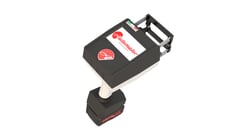
If the machine will work close to operators, safety comes first. Class 1 laser systems enclose the beam, so the operator is protected during normal use. Automator also offers a portable laser marker in safety class 1, a configuration that is not easy to find on the market and lets you mark large parts freely without a dedicated laser room.
Noise matters too: scribe marking is one of the quietest mechanical methods, which makes it a good fit for shared workspaces.
|
Your need |
Best fit |
Why |
|---|---|---|
|
QR codes, DataMatrix, barcodes |
Laser |
High contrast and fine detail, easy to read for scanners |
|
Permanent traceability on technical plastics |
Laser or dot peen |
Permanent marks that do not rub off |
|
Deep marks that resist wear or painting |
Dot peen or scribe |
The mark has real depth in the surface |
|
Colored logos and branding |
Hot marking |
Transfers color from a ribbon with heat |
|
Low-cost logos and lot numbers on hard plastic |
Impact marking |
One stroke, simple and economical |
|
Round or cylindrical parts in large batches |
Roll marking |
Marks the full circumference in one pass |
|
Large or fixed parts |
Portable laser (class 1) or portable dot peen |
The marker goes to the part |
|
Quiet working environments |
Scribe marking |
Continuous-line engraving with low noise |
|
Marking close to operators |
Class 1 laser systems |
The beam is enclosed during normal use |
Here is a closer look at each technology, what it does best on plastic, and which plastic marking machines to explore.
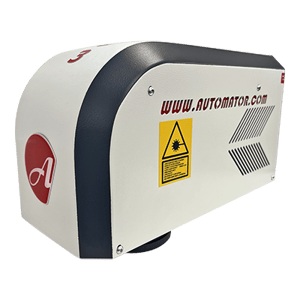
Laser marking modifies the surface of the plastic with a focused beam, without touching the part. It is the go-to choice for crisp codes, logos and serial numbers. Automator offers fiber, MOPA and green laser sources, compact class 4 units for integration, class 1 workstations and a class 1 portable marker for large parts.
Strengths on plastic:
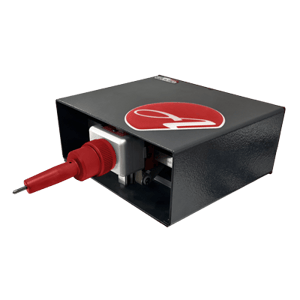
Dot peen marking uses a stylus that creates a series of tiny dots on the surface, forming text, logos and 2D codes. It works on most rigid plastics and comes in benchtop, line-integrated and portable versions, including battery-powered models.
Strengths on plastic:
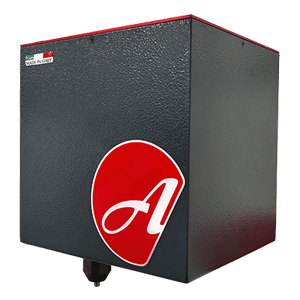
Scribe marking engraves a continuous line with a hard tip, giving clean, deep and elegant marks. It is one of the fastest and quietest mechanical methods, ideal for rigid plastics.
Strengths on plastic:
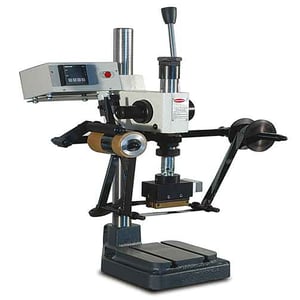
Hot marking uses a heated head to press the mark into the surface, with or without a colored ribbon. It is a simple and fast way to add color and contrast to plastic and other heat-sensitive materials.
Strengths on plastic:
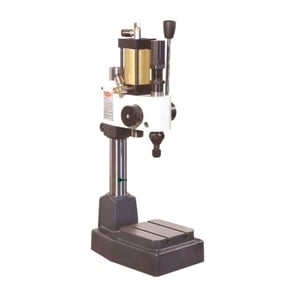
Impact marking engraves the mark in a single, controlled stroke using a type holder or punch. It is a proven, economical way to mark logos and codes on hard plastics.
Strengths on plastic:
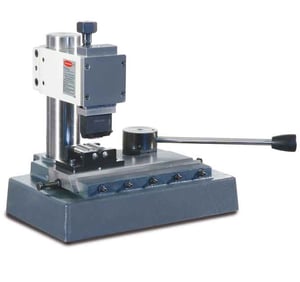
Roll marking transfers the mark by rolling a die against the part, or the part against the die. It is the most efficient way to mark curved surfaces and cylindrical parts made of hard plastic.
Strengths on plastic:
Most plastics used in industry can be marked, but each one works best with certain technologies. Here is a quick guide to the most common ones.


From traceability codes to branding, here are some of the ways our customers mark plastic every day.