Laser Marking Machine Producer: Technologies, Integration & Support for Industrial Marking

Automator has been designing industrial marking systems for over 85 years - laser, dot peen, and mechanical - and the team behind the machines is usually the reason customers stay for decades, not just the machines themselves.


What industrial marking technology do you actually need?

The right marking technology depends on your material, the depth you need, and what happens to the part afterward. Fiber lasers mark metals with speed and precision. CO2 lasers work best on organic and non-metallic materials. UV lasers handle sensitive substrates with minimal heat. Dot peen (micro-percussion) creates a deeper, more physical mark that survives painting, galvanizing, or heavy abrasion. Mechanical presses and roll marking cover simpler, high-volume, fixed-text jobs at a lower cost.

There's no universally "best" technology, only the best fit for your part. A few quick questions usually narrow it down:

  • What material are you marking (metal, plastic, wood, rubber)?
  • Does the part get painted, plated, or heat-treated after marking?
  • Do you need to mark large or awkwardly placed parts without moving them?
  • How much text or graphic detail does the mark need to carry?

If your process also involves materials or finishes a laser genuinely isn't suited for - parts that get heavily galvanized or need very deep, physical marks - Automator's dot peen marking systems and mechanical marking machines cover those cases, engineered by the same team.


One producer, many laser marking technologies

Most laser marking machine manufacturers sell you one configuration and expect your process to adapt around it. Automator's laser range covers every common setup a production line might need, all engineered in-house.

fiber laser marking

Fiber Laser Marking Machines

The workhorse configuration for metal marking, from benchtop units to integration-ready heads
compact laser machines

Compact Laser Machines

A smaller footprint for space-constrained stations or tight line integration.
portable laser machines

Portable Laser Machines

Handheld or wheeled units for oversized or fixed-in-place parts, including the Class 1 Colibrì covered below.
EOS

Laser Cabin Machines

Fully enclosed cabinets for standalone marking stations that need a defined, controlled workspace.

Beyond the physical configuration, the laser source itself changes what you can mark:

Technology

Best for

Typical limitation

Fiber / MOPA laser

Metals, high-contrast marks, QR/2D codes

Less effective on soft plastics

CO2 laser

Wood, leather, packaging, acrylic

Not suited to bare metals

UV laser

Glass, ceramics, heat-sensitive plastics

Slower marking speed


That range matters most when your layout and your material both need to line up with the right laser. A single technical contact can walk you through the configuration and the source that actually fit your line, not just whatever they happen to sell.

Your line stays yours: easy integration by design

A marking machine that can't integrate into your current line becomes a bottleneck. One of the most common concerns we hear from production and quality managers is exactly this: will the new marking system fit the line we already have, or will it force a redesign?

Automator's solutions are designed for integration from the start - compact controllers, standard communication protocols, and marking heads sized to drop into existing stations rather than requiring a dedicated cell. Whether you're adding marking to a robotic line, a conveyor, or a manual assembly station, integration is evaluated case by case with your actual layout.

If integration is the part that worries you most, that's exactly the conversation our technical team is set up to have before you buy anything.


Beyond the machine: consulting, technical support and maintenance

Here's the part most laser marking machine manufacturers treat as an afterthought: what happens after the machine is installed.

Automator's approach is built around three things that go with every system:

  • Consulting on technology choice - a technical conversation about your material, your part geometry, and your production constraints, before you commit to laser, dot peen, or mechanical.
  • Installation and commissioning support - particularly for laser systems, where training and correct setup make a real difference to mark quality from day one.
  • Ongoing technical assistance - for troubleshooting, process changes, or new marking requirements that come up months or years after installation.

This matters because most marking machines don't need frequent spare parts - which means a manufacturer needs a genuinely large installed base and long-term relationships to keep the expertise sharp. That's the model Automator has built over eight decades: fewer transactional sales, more customers who come back when their production changes.


Not sure which laser fits? Let's talk before you decide

Every application is different, and the fastest way to find the right laser is a short conversation with someone who's seen your kind of problem before.

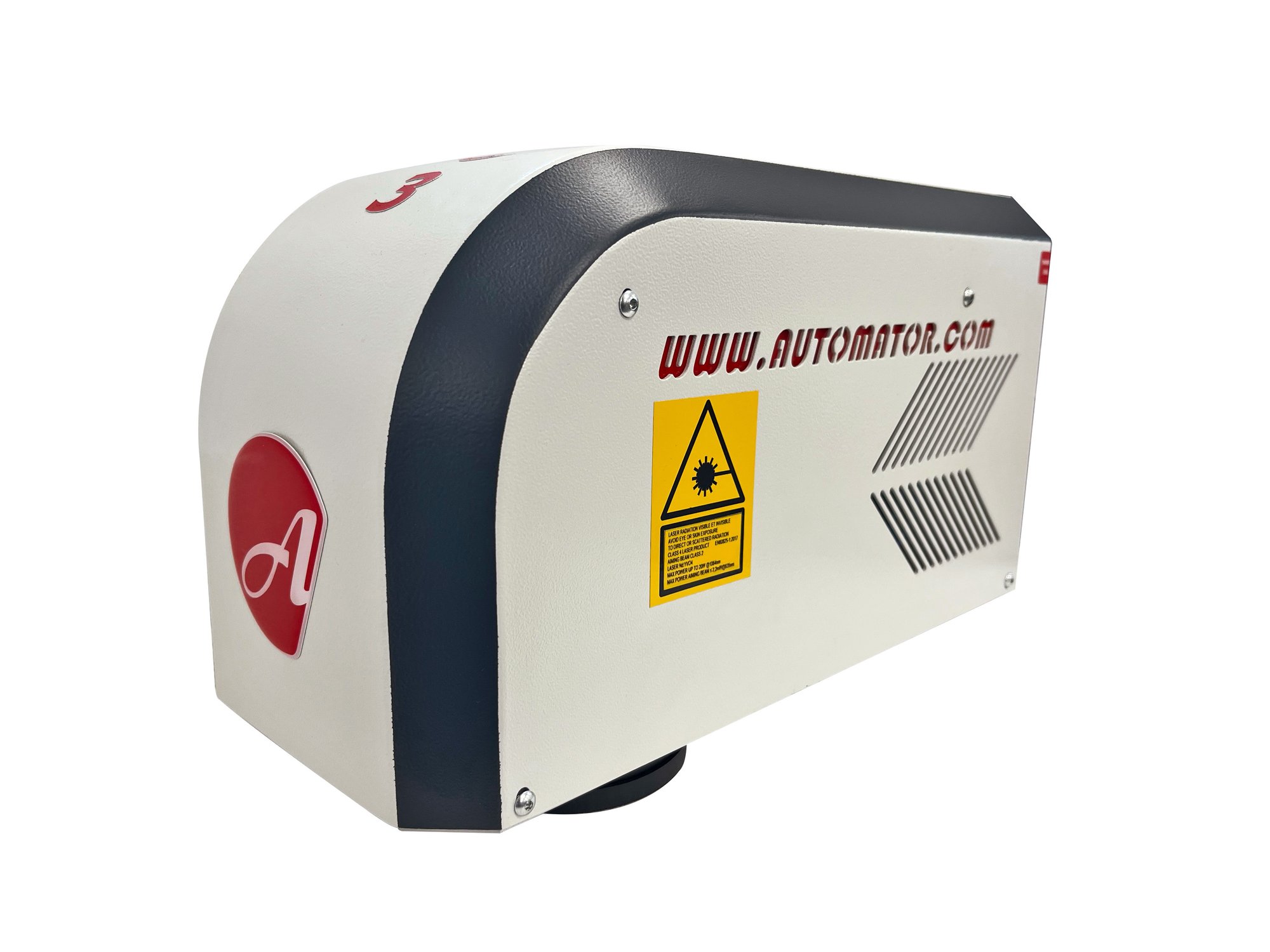
Tell our technical team what you need to mark and what happens to the part afterward, and we'll tell you honestly which laser fits.

Automator Marking Systems
USA | Canada

475 Douglas Ave, Chillicothe

OH 45601

USA


Phone: +1 740-983-0157

Mail: infousa@automator.com