Whether you're marking metal parts, plastic components, or anything in between, getting a QR code that actually scans every time is what matters. Laser engraving is the most reliable way to do it: permanent, precise, and compatible with virtually any industrial material.
This guide covers:
QR code laser engraving is the process of permanently marking a 2D barcode onto a surface using a laser beam. The laser modifies the material (by removing it, oxidizing it, or changing its color) to create the dark and light contrast patterns that make a QR code scannable.
Unlike labels, inkjet printing, or stickers, laser-engraved QR codes don't peel, fade, or wear off. They stay readable through heat, chemicals, abrasion, and years of industrial use. That's why they're the preferred solution in traceability, compliance, and product identification across manufacturing, automotive, aerospace, medical, and logistics.
A properly engraved QR code meets the ISO/IEC 15415 and DPM (Direct Part Mark) grading standards, the international benchmarks for machine-readable code quality in industrial environments.
The short answer: permanence, precision, and versatility. Here's what that means in practice:
Not all lasers work the same way, and material compatibility is the key factor. The three main laser types used for QR code engraving are fiber, CO2, and UV.
Fiber lasers are the go-to choice for marking QR codes on metals. The near-infrared wavelength (1064 nm) is highly absorbed by metal surfaces, producing crisp, deep engravings or high-contrast annealing marks without damaging the part.
Best for:
Recommended power range: 20W for fine marking and annealing on stainless steel and aluminum. 30–50W for faster speeds and deeper marks on tougher alloys. MOPA fiber lasers offer the best control over pulse duration, which is key to achieving high DPM grades.
CO2 lasers work best on organic materials and many plastics. The longer wavelength is highly absorbed by non-metal surfaces but reflects off bare metals.
Best for:
UV systems are less common in general industry but critical in medical device marking and electronics. UV lasers use a short wavelength that produces a 'cold' marking with minimal heat transfer. This makes them ideal for plastics and coated materials where heat distortion would compromise the code or the part.
Best for:
Bare aluminum can be tricky because of its high reflectivity. Anodized aluminum is much more cooperative, because the oxide layer absorbs the laser energy efficiently and produces strong contrast marks that are also corrosion-resistant.
For bare aluminum, higher power settings and slower speeds help achieve the contrast needed for reliable scanning.
The behavior of plastics under a laser depends heavily on the type and color of the material. ABS, POM, and polyamide respond well to fiber lasers. Acrylic is best handled with CO2. Heat-sensitive plastics like PEEK or thin films require UV. The key parameter to control is pulse duration: too much heat causes melting and rounded module edges, which hurts scannability.
Light-colored plastics with darker marks (or dark plastics with light marks) produce the best contrast. If you're unsure, always run a test sample and grade the result before committing to production parameters.
For QR codes on wood, bamboo, leather, or cardboard, a CO2 laser is the standard choice. The challenge is achieving consistent depth and contrast across grain variations, especially on natural wood. Sand the surface smooth before marking and avoid highly resinous species.
A minimum code size of 25×25 mm is recommended to compensate for grain interference.
Many industrial parts arrive with a paint coating, powder coat, or protective layer. In these cases, the laser removes the coating to expose the underlying metal, creating contrast between the coating color and the bare metal. This is a fast, efficient method that works well on automotive parts, machinery, and tools.
Make sure the coating is compatible with laser processing (some coatings release harmful fumes and require appropriate extraction).
Getting the laser settings right is critical. A code can look good visually but still fail on a scanner if any of these parameters are off:
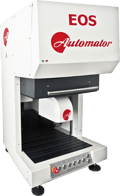
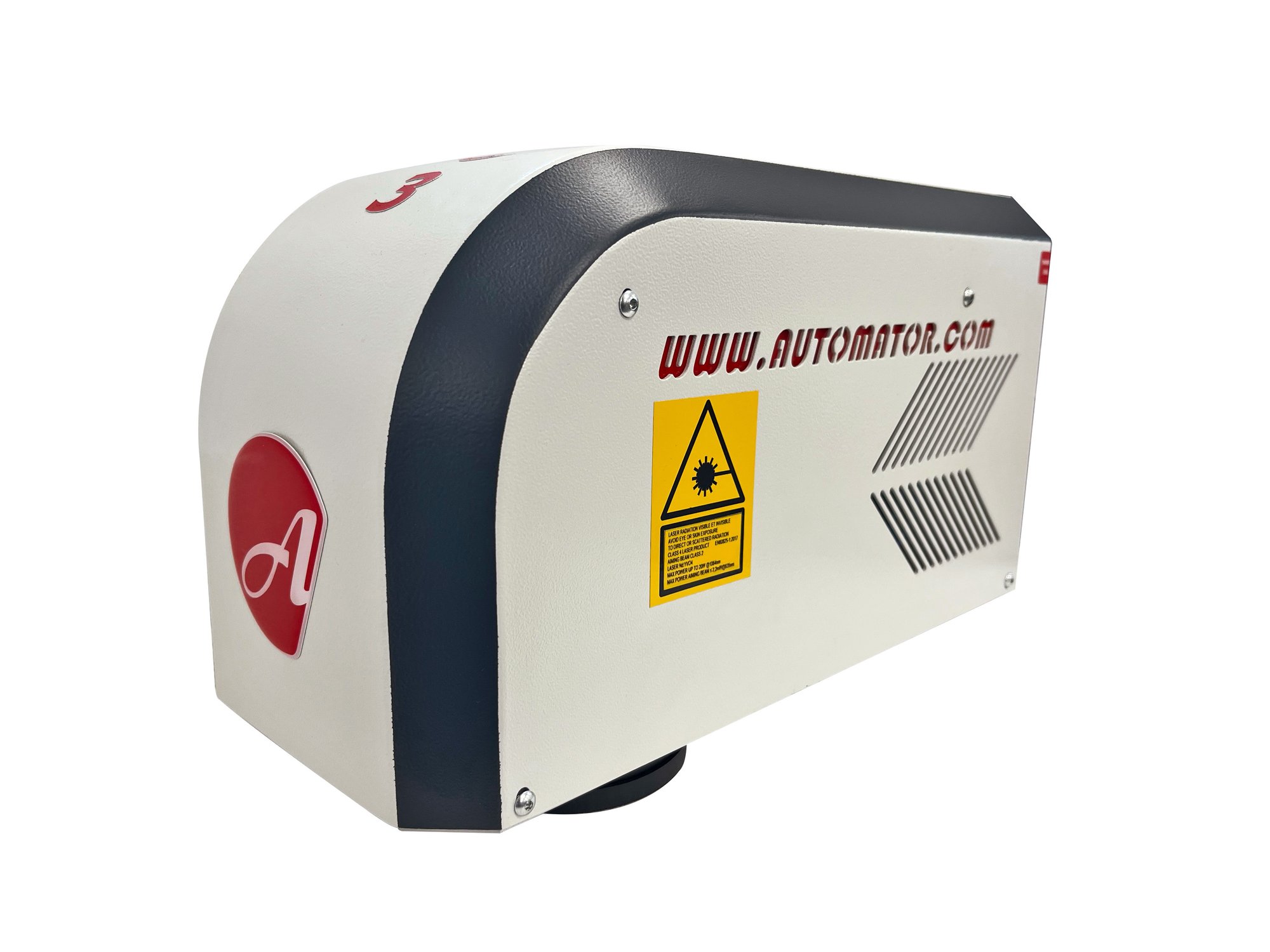
Automator Marking Systems manufactures laser marking machines designed for industrial traceability, including QR codes, barcodes, Data Matrix codes, and serial numbers.
With over 80 years of experience and more than 224 industrial sectors served, we offer a complete range of fiber laser solutions for every use case.
Automator Marking Systems is one of the few industrial marking manufacturers that covers the full spectrum of technologies: fiber laser, CO2, UV, dot peen, impact, scribe, and more. This means we can help you find the right solution for your specific application, rather than pushing a single product.
If you need to engrave QR codes on metal parts, plastic components, or any other industrial material, we're here to help you find the right setup.
475 Douglas Ave, Chillicothe
OH 45601
USA
Phone: +1 740-983-0157
Mail: infousa@automator.com




.png?width=753&height=590&name=colibr%C3%AC-low%20(1).png)